More AI models
Read more

The Most Slept-On Growth Lever on LinkedIn: Events
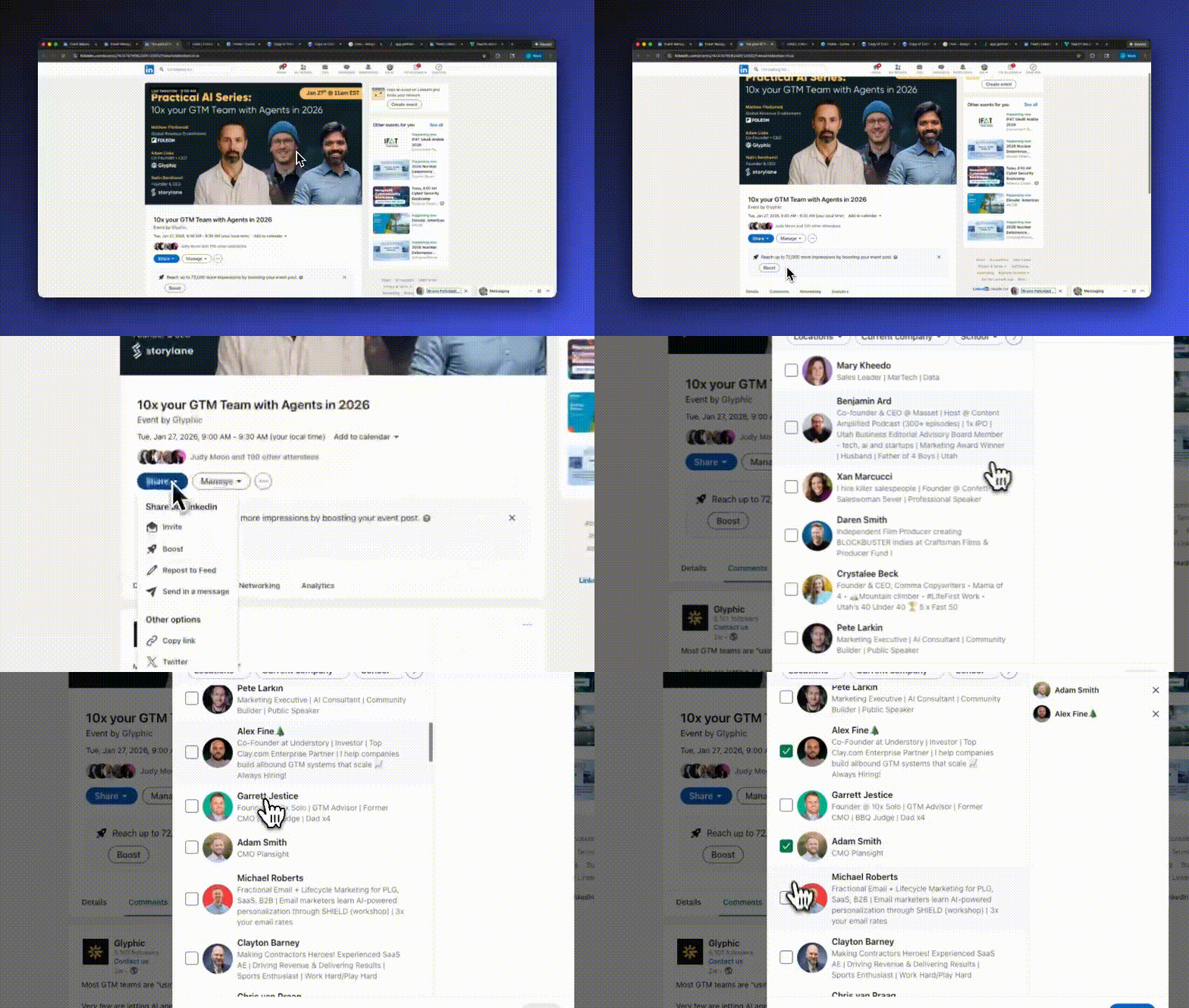

Everyone is obsessed with outbound. More messages, more content, more connection requests. Meanwhile, one of the highest-ROI growth levers on LinkedIn is sitting right in front of most go-to-market teams, and almost no one is treating it like a serious growth channel.
Events.
After years of managing executive LinkedIn accounts and helping GTM teams drive real pipeline, I can say this confidently: most companies dramatically underestimate what LinkedIn events can do. The few that understand it quietly fill rooms while everyone else fights for attention in the feed.
Yes, you can host your event directly on LinkedIn or send registrants to a platform like Luma or Riverside. Both approaches work. But the real value is not in where the event lives. The value shows up after someone registers.
Once a person signs up, they can invite up to 1,000 people from their own network. That means every attendee has the potential to become a distribution channel, extending your reach far beyond your immediate audience.
The smartest teams operationalize this immediately. A simple message to registrants can unlock serious momentum: invite 25 colleagues in similar roles and get entered into a giveaway. Now your event is no longer dependent on your reach alone. It starts compounding across networks you would never have accessed otherwise. This is how events go from moderately attended to completely full.
Because manually inviting people is a grind, and most teams are not built for repetitive, operational work inside LinkedIn.
The platform gives you some filtering capabilities, but they are surprisingly limited. You can sort by:
But one of the most important filters is missing: job title.
Trying to hand-pick the right attendees quickly turns into a time-consuming mess. Most teams either abandon the effort altogether or send broad, low-quality invites that do little to improve attendance.
Operators take a different approach. Instead of searching one name at a time, build a targeted list of first-degree connections that match your ICP outside the platform. Once the list is defined, systemize the invite process so the right people get notified without your team burning hours clicking around LinkedIn.
Yes, this often involves automation. Despite the hesitation some leaders still have, responsible automation is not spam. It is leverage. No serious revenue team would manage pipeline in spreadsheets if a CRM existed. The same logic applies here.
Most LinkedIn activity is easy to ignore. Event invites are not.
When someone receives an invitation, LinkedIn forces a decision:
That simple mechanic makes invites dramatically more visible than a typical message or post. You are stepping directly into someone’s notifications instead of hoping the algorithm surfaces your content. Whether your event is virtual or in person, this is one of the simplest high-impact plays available to modern GTM teams, yet very few treat it that way.
The companies that win on LinkedIn over the next few years will not just publish content. They will convene audiences. They will turn prospects into communities, connections into conversations, and digital relationships into real ones.
In a world drowning in automation and AI-generated noise, people are placing a premium on environments that feel human. Events create that environment faster than almost anything else.
If events are currently an afterthought in your growth strategy, it is worth asking a hard question: Are you building an audience, or are you just broadcasting into the void?
The path forward is not complicated:
Stop fighting for attention and start gathering rooms.
%20(1).svg)


