More AI models
Read more

You Are Sitting on a Goldmine of LinkedIn Connections. Here Is How to Actually Use Them.
Most professionals treat LinkedIn like a content platform. They post updates, scroll the feed, and continue adding connections over time without thinking much about what happens next. But very few stop to ask an important question: What can I actually do with the network I have already built?
If you have been active on LinkedIn for any meaningful length of time, you are likely sitting on hundreds or even thousands of first-degree connections. Former colleagues, founders, operators, buyers, investors, and industry peers are already in your orbit. These are people who recognize your name and often come with built-in trust.
Yet despite how valuable this audience is, LinkedIn gives you very few ways to work that network intelligently.
Before getting into the leverage play, it is worth addressing something many professionals overlook. Your profile matters more than you think. Too many people still treat LinkedIn like a corporate resume, which often makes them blend in rather than stand out.
Something as simple as an interesting banner image or personal detail can spark more conversations than expected. One of my photos slalom skiing at Lake Powell has generated more direct messages than any polished corporate photo ever has. People remember personality and respond to signals that feel human.
Now let’s talk about where the real opportunity lives.
When you click into “My Network” and open your connections, you are immediately faced with an endless scroll. You can search by name and apply a few basic filters, but your ability to truly segment your network is extremely limited. It is clunky, inefficient, and not built for operators who want to use LinkedIn as a serious growth channel.
This creates a frustrating scenario. You know there are buyers in your network and people who could benefit from your product or service. But actually finding them feels like digging through a junk drawer without any organization.
After a few minutes of searching, most people give up and go back to reacting to whatever shows up in their feed.
Smart operators take a different path.
Inside your LinkedIn settings under Data Privacy, there is an option called “Get a copy of your data.” Most people have never clicked it, but you absolutely should. Request the connections archive, and within about 24 hours LinkedIn will send you a CSV file containing your first-degree connections.
That file is leverage.
Once you pull the data into a spreadsheet, everything changes. Instead of scrolling aimlessly, you can filter, sort, and segment with intention. You move from passive browsing to strategic visibility almost immediately.
You can begin organizing your network by company, industry, geography, or keywords that align with your business priorities. In one move, you gain clarity that simply does not exist inside LinkedIn’s native interface. This is often the moment professionals realize they were sitting on far more opportunity than they thought.
The real transformation happens when you treat your network like a structured asset rather than a list of names.
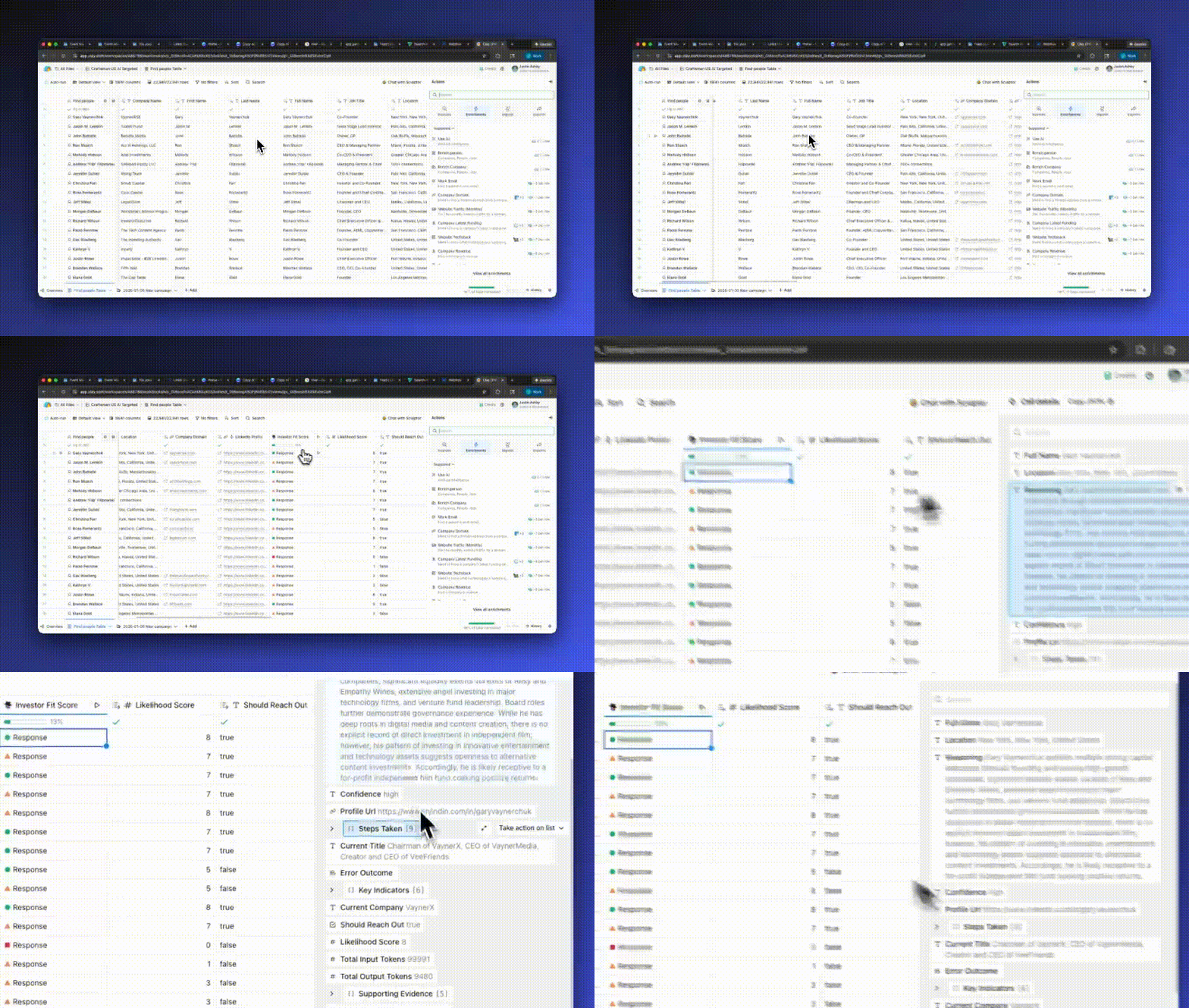
Personally, I like to bring this data into Clay and create an AI agent that reviews each LinkedIn profile and ranks connections based on how closely they match my ideal customer profile. Within minutes, I have insight that would have been nearly impossible to generate inside LinkedIn itself.
Immediately, I can see:
Instead of guessing, I now have a ranked list that allows me to operate with precision.
When it is time to launch an event, test a new offer, promote a service, or reconnect with strong-fit prospects, I am not blasting my entire network. I am engaging the right segment with purpose. Most professionals think they need more leads when in reality they are already connected to many of them.
The issue is not access. It is visibility.
For founders, fractional leaders, and go-to-market executives, this shift is especially important. Your LinkedIn network is one of the few growth assets you truly own. You built it over years of career moves, partnerships, introductions, and shared experiences.
But if you cannot segment it, rank it, prioritize it, and activate it, then it remains little more than a vanity metric.
When you structure your network data properly, it becomes something far more valuable:
And unlike paid acquisition channels, you are not starting from zero or paying for attention.
It is important to recognize that LinkedIn was never designed to provide deep network intelligence. The platform is optimized for engagement, not operational clarity. But serious operators do not rely on default systems when better ones can be built.
If you care about growth, you cannot depend on endless scrolling and hope you stumble across the right person at the right time.
Download your connections.
Organize the data.
Rank your ICP.
Work the right segment deliberately.
Most people will never take this step, which is exactly why it creates leverage. The professionals who do often discover they were sitting on a goldmine the entire time.
Stop scrolling your network.
Start operating it.
%20(1).svg)


